Flow chemistry moves to Asia
Maxime Drobot and Dr Omar Jina from Syrris present recent results obtained in flow chemistry on their new Asia flow system*
Flow chemistry is a very exciting technique that has received a large amount of interest and its use in industry has dramatically increased over the last three years. This is due to the numerous advantages offered by flow chemistry that have been extensively discussed in reviews and journals.1,2
The efficient mixing and excellent heat transfer in flow lead to much higher conversions, selectivity and yields. On the practical side, the technology has been implemented due to the inherent safety benefits for hazardous chemistry and handling noxious reagents and, of course, the easy scale-up of a chemical process.
Flow chemistry's increasing uses also results from its applicability across multiple disciplines in many different industries. Syrris a chemistry technology company based in Royston, UK, has seen a particularly high interest in the field of nanoparticles, where the inherent control and accuracy of the reaction conditions are vital. There have also been important applications in biofuels, logD studies and the forced degradation of consumer products.3-5
The key driving force of flow chemistry, however, is still the pharmaceuticals industry and multiple departments are now deploying it. Discovery chemists use it to quickly synthesise a library of compounds or screen a series of reactions. The ability to perform reactions that cannot be performed in batch means that they can also access new chemical space and produce compounds on a scale that is now relevant for further synthesis and analysis.
Process chemists use flow chemistry for rapid reaction optimisation and developing inherently safe reaction conditions. The process can then be accomplished on scales from milligrams to grams to kilograms, all on the same instrument. The same compound can then be produced on a commercial scale by transferring the flow chemistry process with minor modifications to a continuous manufacturing plant.
Commercially available flow chemistry systems allow the handling of many types of reagents, so the chemistry is not limited by the technology. Many examples of work in homogeneous reactions in solution and heterogeneous reactions with solid- and gas-phase reagents have been published. This gives great flexibility to the chemist. Almost any desired reaction can be performed.

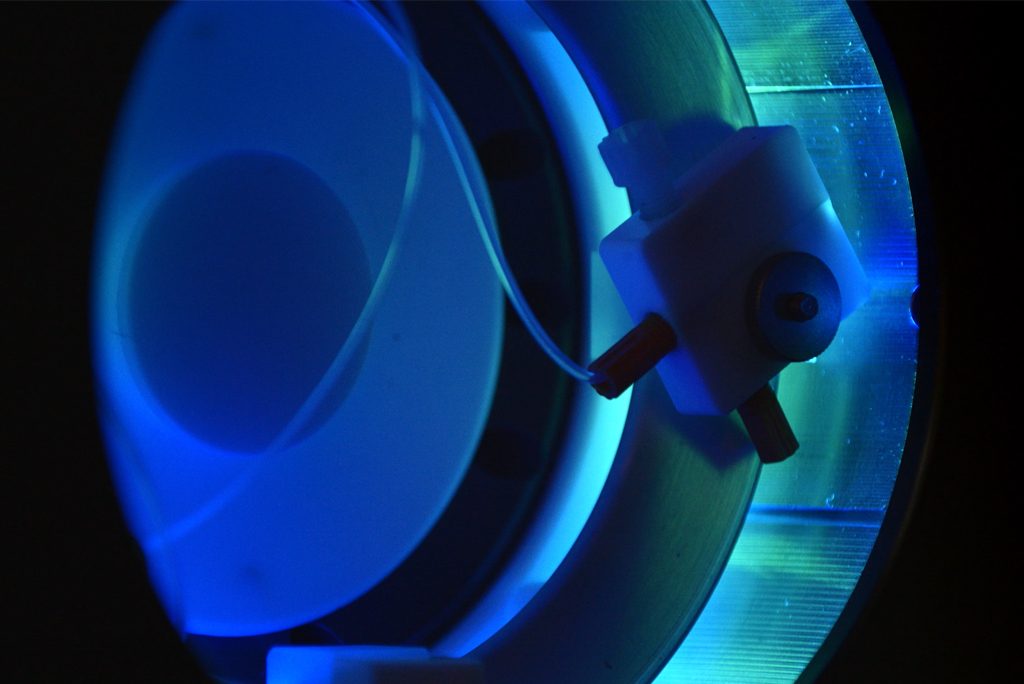
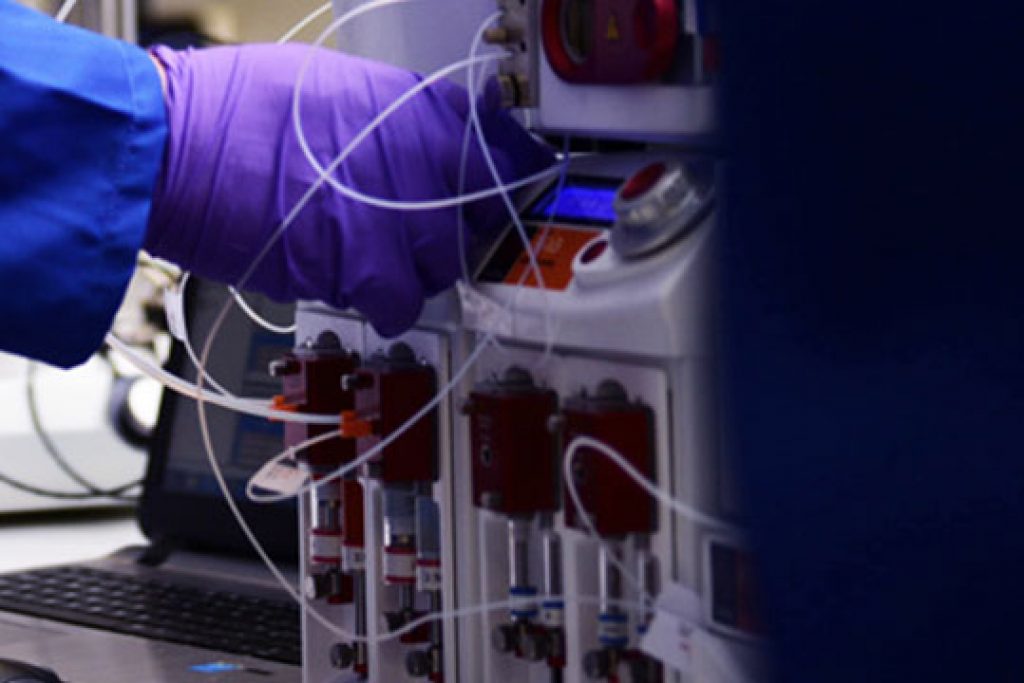
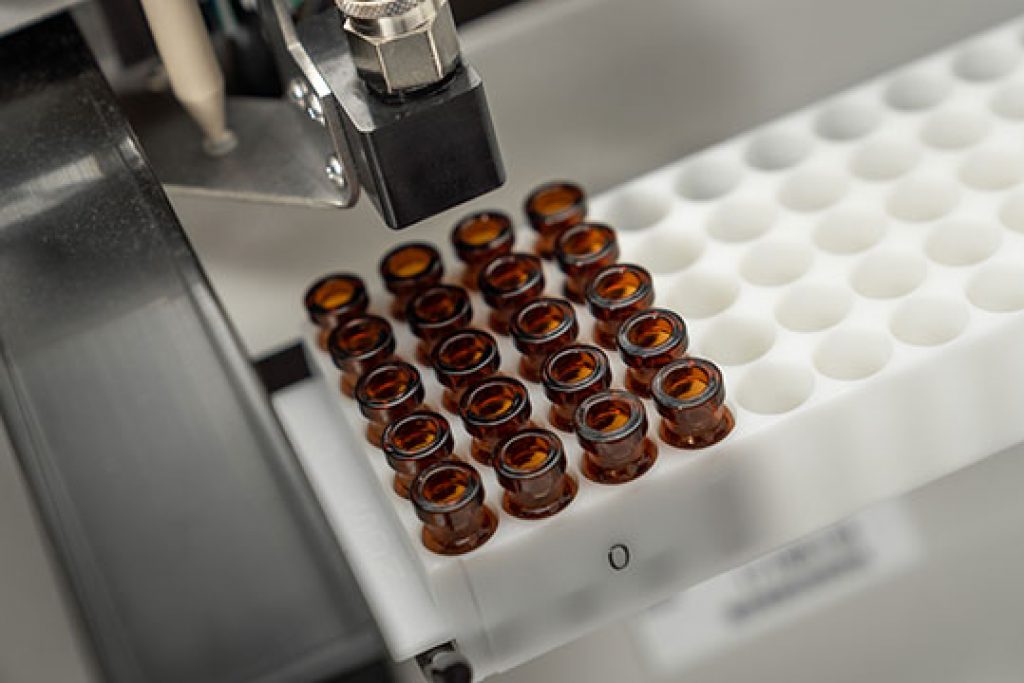
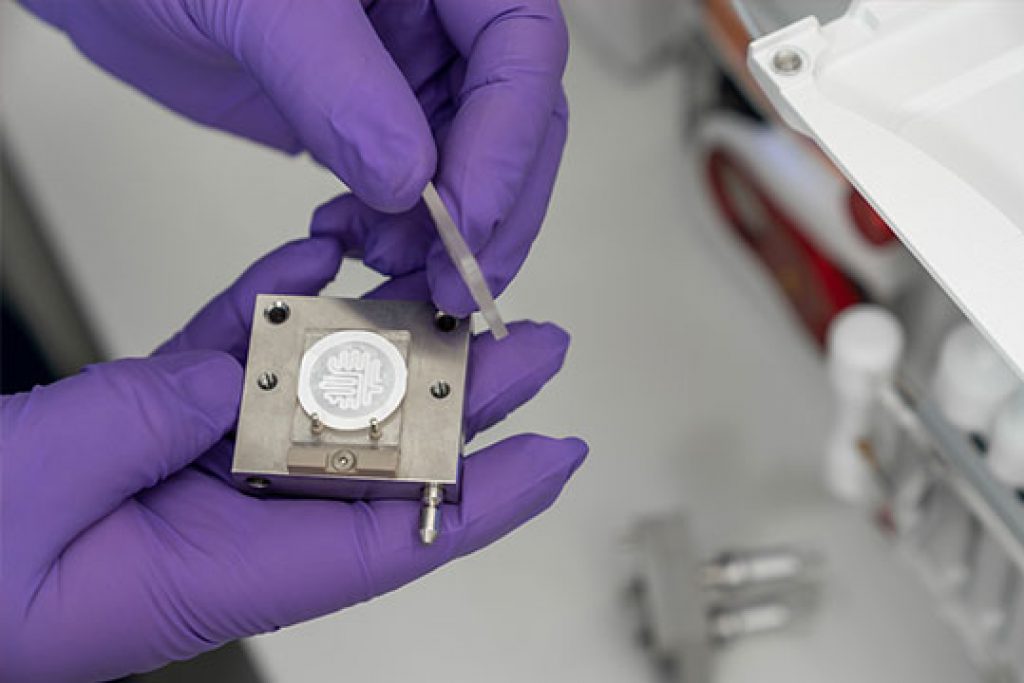
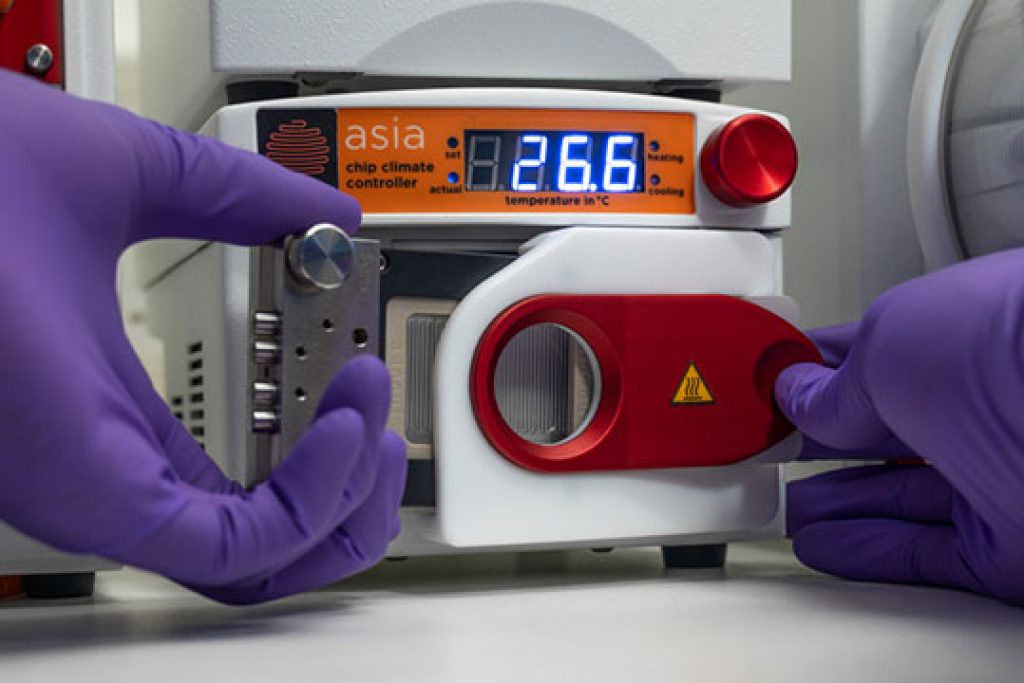
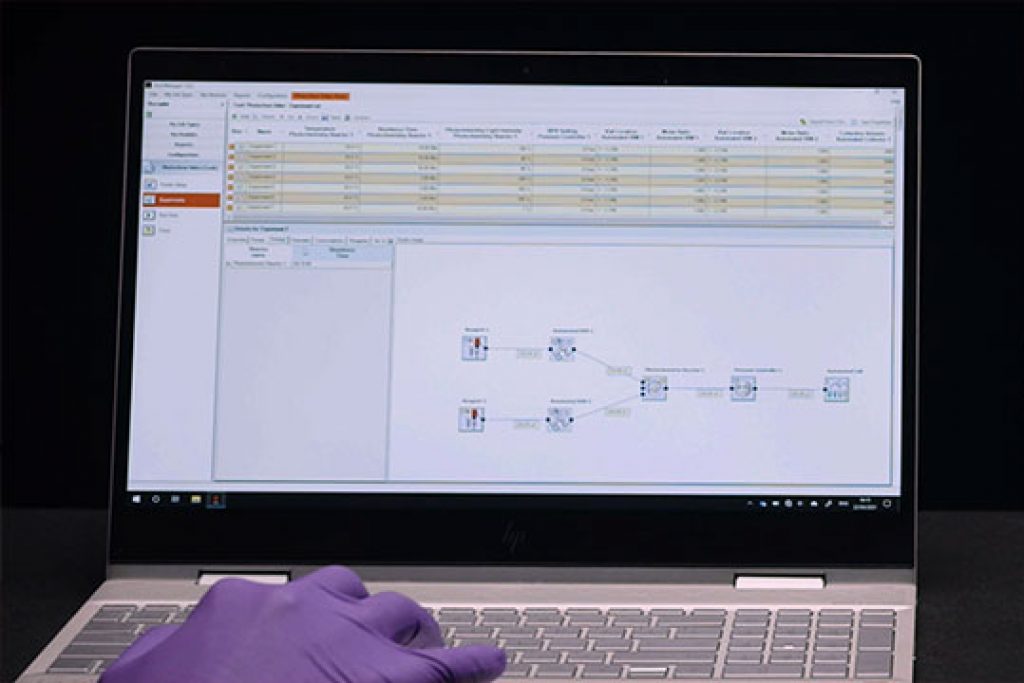
Syrris's Asia system has been used in various flow chemistry experiments
Traditional batch reactions may need some adaptation in order to work in flow, but the results are often worth the time spent as flow chemistry brings extra advantages to existing transformations and opens the way for reactions that were previously difficult or impossible to perform in batch. For example, Cosford et al. showed that a multiple-step, multiple-day, difficult batch synthesis can be performed in one flow process in a matter of minutes.6
Another key benefit of flow chemistry is that techniques such as photochemistry, electrochemistry, hydrogenation, etc., which are difficult techniques to implement on a preparative scale and therefore sometimes disregarded, are now enabled. This ensures that the chemist can access more synthetic space.
Small flow reactors (from µl to several ml) mean that the specific equipment required for those chemistries can also be small in scale and costs. The small volume of reactive material associated with excellent heat exchange means that safety issues are reduced or eliminated in microreactors.
In 2006, when flow chemistry was in its infancy, the total synthesis of oxomaritidine on Syrris's Africa flow chemistry system by Baxendale, Ley et al. showed its full potential.7 This landmark in natural product synthesis is an excellent illustration of how a complicated seven-step synthesis can effectively lead to a natural product in good yield and purity in one continuous process.
The process also used the full spectrum of chemistries in flow - a mix of gas reagents, solid-supported reagents and homogenous chemistry. This proved flow chemistry's potential to the pharmaceuticals industry. Since then companies like Dow Chemicals, Organon, Clariant and AstraZeneca have published successful applications of flow chemistry on a variety of scales.8-11

Flow chemistry at Syrris
Syrris has been involved in flow chemistry for over ten years and has witnessed the growth of the technology from concept to industrial implementation. The company has developed multiple flow chemistry systems, including the first fully automated flow chemistry system Africa, which is well established in industry, and academia and its latest creation, Asia.
Asia was developed in consultation with the company's customer base. We believe it to be the both the most advanced flow chemistry system available yet the easiest to us. To the best of our knowledge, it is unique in combining chemical resistance, ease of use, leak detection, blockage management, very smooth flow and a wide range of temperatures and pressures and flow rates.
The system is modular and can therefore be adapted to both a very wide range of chemistries and the relevant experiences of the chemist. For example, a small proof of concept system can be upgraded to enable scale up from milligrams to grams to kilos, full automation and integrated work-up and analysis. This ensures that it fits current chemistry requirements and, via the additions of modules, can expand the scope of the chemistry achievable in the future.
The rest of this article presents some examples of the use of Asia and flow chemistry in general, with some recent results obtained using solid-supported chemicals.
Solid-supported chemicals in flow
Solid-supported chemicals are commonly used in batch chemistry and their use is widespread in industry. They can be classified into three categories: reagents, catalysts and scavengers. The use of immobilised chemicals overcomes one common issue encountered in flow chemistry - the handling of insoluble materials. In addition to the advantages of flow chemistry, they also offer many other valuable advantages for the synthetic chemists:
- No work-up is required with solid-supported reagents; all reagent excess remains on the solid support.
- Easy in-line work-up: flowing the reaction solution through a column packed with the adequate scavenger allows impurities or excess reagent to be removed.
- High exposure of reagents to catalyst: the ratio of catalyst/reagent for a given fraction of the reaction mixture is large compared with traditional batch chemistry and in turn improves the reaction rate
- Minimal metal traces are observed in final product, because the product and catalyst are separated in the process
The silica-supported catalysts used for the work in this article are Silicycle's SiliaCats. They are free-flowing and are easy to handle and load into a solid phase reactor, due to their minimal static charge. More importantly, the SiliaCat products offer an excellent resistance to high temperatures and offer maximum chemical compatibility.12
Suzuki coupling
We focused our attention on the Suzuki-Miyaura coupling reaction, a C-C bond formation reaction with palladium catalysts that is common in the pharmaceuticals industry. This reaction is usually performed in a microwave, as it requires high temperatures for activation. Progressing it to larger-scale synthesis can pose problems as microwave reactions are severely limited in scale, so a flow chemistry process allowing continuous Suzuki-Miyaura coupling will be a valuable process.

Figure 1 - Suzuki coupling using SiliaCat palladium catalyst
SiliaCat diphenylphosphine palladium (DPP-Pd) and SiliaCat thiol palladium (S-Pd) have proven to be successful in batch, showing significant improvements in terms of reactivity and metal traces in final product over traditionally used catalysts.13 We decided to investigate the same reaction (Figure 1) using the Asia 220 system, where different benzyl halide substrates were tried in order to demonstrate the versatility of the Suzuki-Miyaura coupling in flow.
The Asia system was set up as per the fluidic pathway shown in Figure 2. The solid phase reactor was packed with wet SiliCat Tempo and encased on an Asia heater module to allow accurate temperature control. The conversion and selection rate were measured by GC-MS.
Reagents 1 (0.020 M solution of benzyl halide in 20% methanol/water) and 2 (0.022/0.030 M solution of phenyl boronic acid/potassium carbonate in 20% methanol/water) were pressurised at 1 bar and processed through the solid phase reactor via a T-piece, while varying residence times and temperatures.

Figure 2 - Fluidic set-up for Suzuki-Miyaura coupling in flow
A first attempt with 4-iodonitrobenzene as substrate yielded disappointing results, with no conversion at room temperature and only 50% conversion (100% selectivity) at 70°C. The mixing efficiency was then increased by pre-mixing both reagent solutions together and using a single pump channel to process the reaction. It gave significantly improved results with 100% conversion (100% selectivity) at room temperature.
Further experiments were carried using the same protocol to give the results shown in Table 1. These show that Suzuki-Miyaura reactions can be successfully achieved in flow with the correct choice of SiliaCat catalyst. The Asia flow system allowed quick optimisation of each reaction to give maximum conversion and selectivity.
Mixing was an important factor and pre-mixing all reagents significantly improved the reaction speed and conversion rate. The use of solid-supported palladium catalysts avoids the painful catalyst removal work-up usually associated with this reaction. Leaching from the SiliaCat catalyst into the product was negligible.

Table 1 - Suzuki-Miyaura coupling results
Future work will be performed on the comparison of Suzuki substrates achieved in flow versus similar reactions in microwaves. The high temperatures obtained in a microwave can be achieved in flow using a pressurisation module to pressurise the fluidic system up to 20 bar, thus heating the reaction solvent over its boiling point and dramatically increasing the rate of reaction. For example, 7 bar pressure enables 20% methanol/water to be heated to 150°C.
Alcohol oxidation in flow
Following the success of Suzuki-Miyaura coupling in flow, we investigated the oxidation of primary alcohols in flow using metal-free catalysts. Nitroxyl radicals, such as 2,2,6,6,-tetramethylpiperidine-1-oxyl (Tempo), are useful oxidation catalysts because the oxidation conditions are usually mild and the issues of metal leaching and catalyst regeneration are eliminated. The original batch reaction developed by SiliCycle using SiliaCat Tempo (Figure 3) yielded desired product in 97% yield.14

Figure 3 - Tempo oxidation
Bogdan and McQuade had used similar experimental conditions, known as Anelli-Montanari conditions, to perform this oxidation successfully in flow.15 They observed very good conversion for a range of substrates and stressed the excellent biphasic mixing obtained in flow which is a key factor for effective oxidation.
We aimed to optimise this reaction on the Asia system even further by avoiding cooling and removing co-catalyst KBr if possible. The Asia system was set up as per the fluidic pathway shown in Figure 4. The loops were 5 ml in size and made from PTFE. The chip was a 250 µl glass microreactor. A solid phase reactor was packed with 0.45 gm wet SiliCat Tempo and connected to the microchip output and the product collector.
Solvents 1 (dichloromethane) and 2 (water) were pressurised to 1 bar using the Asia's pressurised input store and pumped at a flow rate of 50 µl/minutes each to achieve a residence time in the solid phase reactor of ten minutes. A 0.4 M solution of benzylalcohol in dichloromethane (Loop 1) and a 0.5 M aqueous solution of NaOCl buffered at pH 9 with NaHCO3 (Loop 2) were injected into the system which was left running for two hours at room temperature (16°C).
TLC (with 100% hexane eluent) showed total consumption of benzyl alcohol and the presence of a new single product. GC-MS analysis confirmed that pure benzaldehyde had been obtained. After this first success, we reduced the residence time in the solid phase reactor down to two minutes, leading again to full conversion to pure benzaldehyde. By contrast, in batch conditions, it took an hour to achieve 97% conversion.

Figure 4 - Fluidic set-up for Tempo oxidation in flow
The results clearly show that the Tempo oxidation reaction is improved when performed in flow compared to batch. In flow, the reaction can be performed at room temperature, is much quicker and does not require KBr co-catalyst. The excellent mixing obtained in flow seems to be the key: when we first performed the reaction without the glass microchip, using only a T-piece at the input of the column reactor, the conversion did not exceed 20%.
It is important to note is that no post-reaction clean up is required to remove Tempo catalyst:; the reaction is simpler to set up and achieves cleaner product in better yield. Further studies are being carried out using Syrris's proprietary Fllex (Flow Liquid-Liquid Extraction) module at the end of the fluidic set-up to automate the work-up by continuously separating the organic phase from the aqueous phase.
Conclusion
Flow chemistry has been successfully used to optimise Suzuki-Miyaura coupling and Tempo oxidation reactions. The results obtained showed significant advantages over the analogous reactions in batch.
Both examples have demonstrated that the use of solid-supported catalysts in flow can yield reactions which are faster and cleaner than conventional methods. Multiple benefits coupled with access to previously unreachable reactions demonstrate that flow chemistry is a powerful tool available to all organic chemists.
* - The authors would like to thank Valerica Pandarus and Dr Francois Beland from Silicycle for their insight on SiliaCat and the practical chemistry work performed in Silicycle's laboratories
References:
1. M.S. Chorgade, Speciality Chemicals Magazine, October 2007
2. D. Webb & T.F. Jamison, Chem. Sci. 2010, 1, 675-680
3. M. Wojnicki et al., Rudy i metale niezelazne 2009, 12, 1-5
4. E. Crawford et al., Fuel Chemistry Division Preprints, 2008
5. M. Alimuddin, J. Med. Chem. 2008, 51, 5140-5142
6. A. Herath & N.D.P. Cosford, Org. Lett., forthcoming
7. I.R. Baxendale, S.V. Ley et a.l, Chem. Commun. 2006, 2566-2568
8. J. R. McConnell et al., Org. Proc. Res. Dev., 2008, 12, 940-945
9. G. J. Kemperman et al., Org. Proc. Res. Dev 2008, 12, 911-920
10. V. Hessel et al., Org. Proc. Res. Dev., 2004, 8, 511-523
11. J. Pelleter & F. Renaud, Org. Proc. Res. Dev., 2009, 13, 698-705
12. M. Pagliaro et al., Org. Proc. Res. Dev., 2009, 11, 766
13. M. Lemay, Top. Catal., 2010
14. M. Pagliaro et al., Org. Proc. Res. Dev., 2007, 11, 766-768
15. A.Bogdan & D.T. McQuade, Beilstein J. Org. Chem. 2009, 5
Source: Specialty Chemicals